ServicesScreen Cleaning & Repair
Window Screen Cleaning & Repair in Walterboro
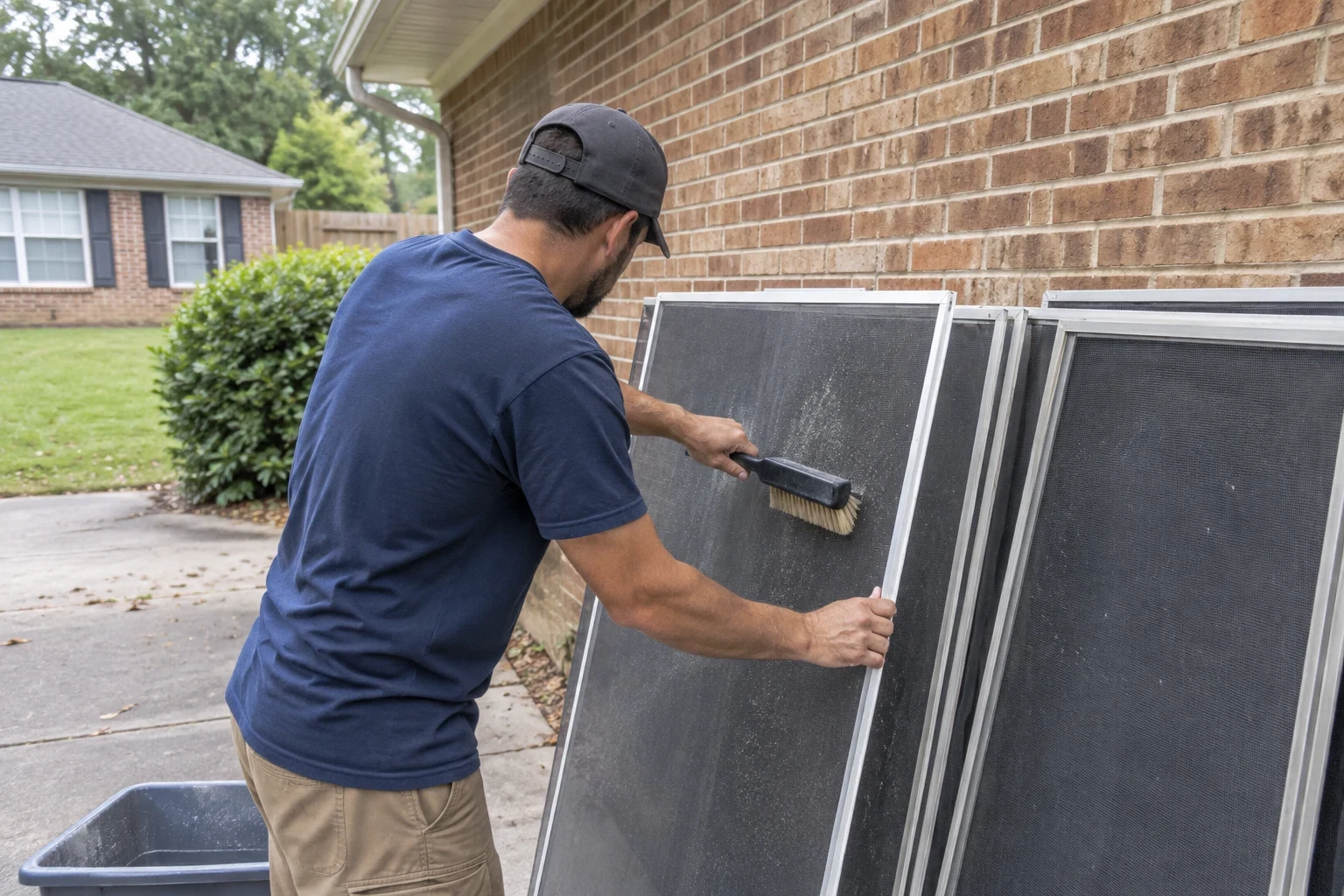
Screens hold pollen, dust and mildew long after the glass behind them is clean. We wash them by hand and replace torn mesh or tired spline. Then we set each screen back in its own window and check in afterward to see how they are holding up.
Screens that let light and air through again
A screen is a fine woven mesh held in an aluminum frame by a rubber cord called spline. Over a few seasons the mesh fills with dust, pollen and the gray film that grows in damp weather. Your windows look dull even after the glass has been cleaned, and less breeze makes it through.
Window screen cleaning and repair is the right call when your screens look hazy, smell musty when the sun hits them, or have small tears and loose corners that let insects in. Most screens do not need to be thrown out. A careful wash brings back the color of the mesh, and rescreening a frame gives you a panel that fits as well as the day it was made.
We often pair this work with residential window cleaning, since clean glass behind dirty screens is only half the job.
What the work includes
- Removal and labeling
- We take each screen down and mark which window it came from. Screens that look identical often differ by a fraction of an inch, and that small difference is why a screen rattles or will not seat.
- Hand washing
- We use a soft brush and a mild cleaning solution, then rinse at low pressure. High pressure stretches fiberglass mesh and can pop the spline out of its channel, so we keep the water gentle.
- Rescreening torn or sagging panels
- When the mesh is torn, brittle or baggy, we pull the old spline and mesh and roll in new material pulled evenly tight. We can talk with you about standard fiberglass, aluminum, or a heavier pet-resistant mesh.
- Spline and small hardware
- Spline shrinks and cracks after years of summer sun, and the mesh starts to creep loose at the corners. We replace it, along with pull tabs where they are missing or broken.
- Frame check
- We look over each frame for bends, loose corners and bad fit. Minor bends can often be eased back into line; when a frame is too far gone, we tell you plainly.
- Refitting and care notes
- Every screen goes back in its own window and is checked for a snug fit. Before we leave, we show you how to keep the mesh clean between visits.
Signs your screens need attention
A gray or yellow haze
Look at a screen from a few feet away. If it looks cloudy rather than nearly invisible, the mesh is holding a layer of dust and pollen, and in spring that pollen can turn screens noticeably yellow.
Musty smell or dark spots
Mildew grows in the fine weave during humid months. You may notice it as speckling near the bottom of the frame or a damp smell when the window is open.
Tears, holes or pulled corners
Even a small hole lets in mosquitoes and gnats. Mesh pulling away at a corner usually means the spline has shrunk or cracked.
Screens that rattle or fall out
A screen that will not sit flat may have a bent frame, worn spline or a missing tension spring. It may also simply be in the wrong window.
Brittle mesh
If the mesh crinkles or flakes when you press it lightly, it has been weakened by sun. Washing will not help, but rescreening will.
What shapes the cost
Screen work is priced by what we actually handle, so the number of screens and their condition matter most. We explain how the work is priced on the phone and go over any repairs with you before we begin them.
Number and size of screens
A house with a handful of standard screens is a shorter job than one with large picture-window or patio door screens.
Cleaning versus rescreening
A wash alone takes less time and material than replacing mesh and spline. Brittle or torn screens add to the job.
Mesh choice
Standard fiberglass is the most common. Aluminum and pet-resistant mesh cost more in material and take a little more care to install.
Access
Second-story screens that come out from the outside need ladder work, which takes longer than ground-floor windows.
Pairing with other services
Booking screen work alongside window cleaning or window track and sill cleaning means one visit covers it all, and the screens go back onto clean glass and clean tracks.
How a screen visit runs
- 1
A conversation by phone
You tell us roughly how many screens you have, whether any are torn, and whether you would like the windows cleaned too. We talk through what we expect to find and how we will price it.
- 2
Removal and inspection
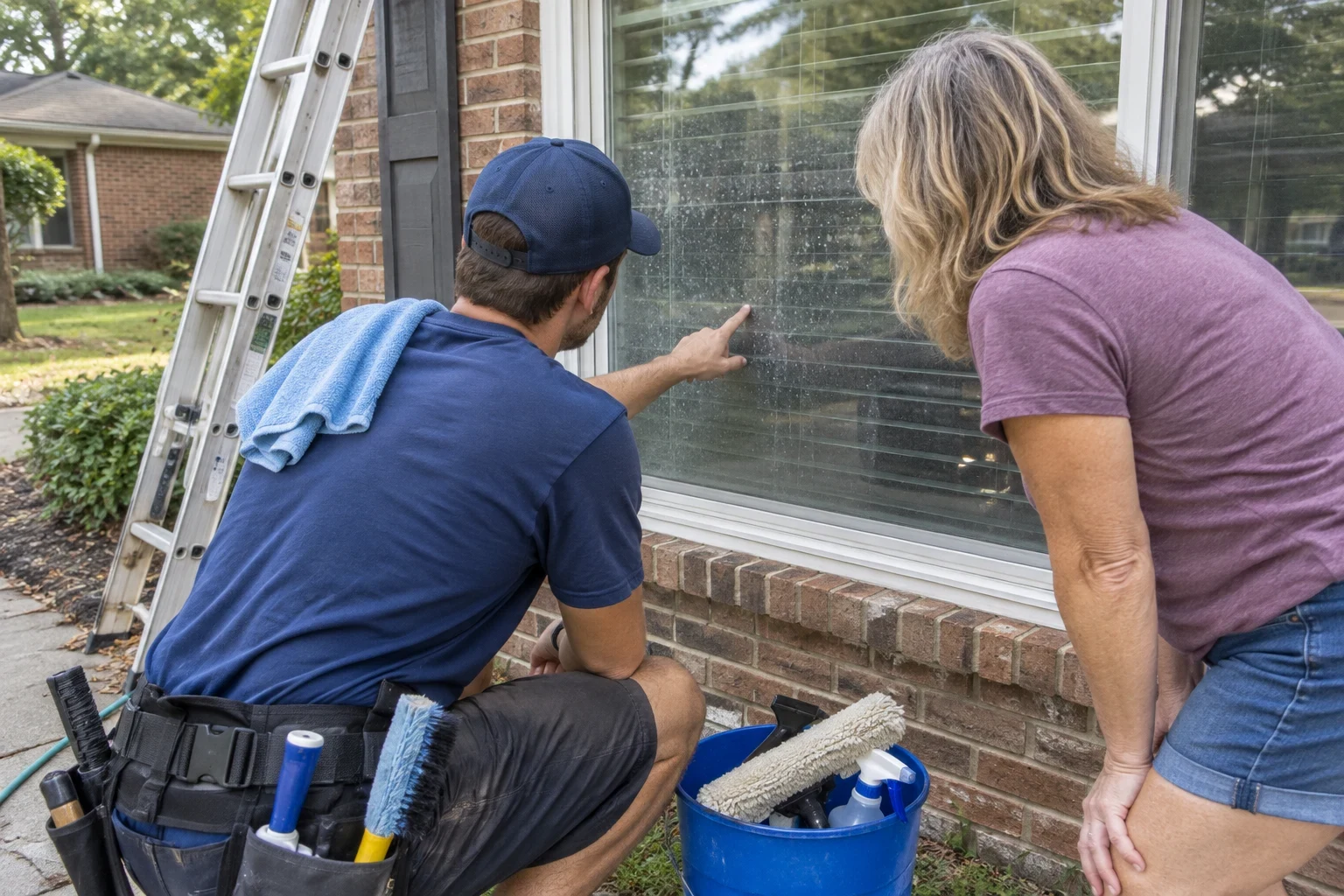
On the day, we take the screens down, label each one, and look them over with you. Anything that needs repair is pointed out before we start, so there is nothing unexpected later.
- 3
Washing and repairs
Screens are washed and rinsed, then left to dry. Panels that need new mesh or spline are rescreened on site wherever the frame allows.
- 4
Refit and walk-through
Each screen goes back where it came from and is checked for fit. We walk you through simple care: rinse with a garden hose on a gentle setting, brush lightly with a soft brush, and avoid pressure washers.
- 5
We check back
A little while after the visit, we get in touch to ask how the screens are fitting and whether anything has shifted or loosened. If something needs a second look, we talk it through with you.
Screen cleaning and repair questions
Do I need to take the screens out before you arrive?
No. We remove them ourselves and label each one so it returns to the right window. If some screens are painted shut or stuck, let us know on the call and we will plan for the extra care.
Can a torn screen be repaired, or does it need replacing?
Most torn screens can be rescreened in their existing frame with new mesh and spline. Replacement only makes sense when the frame is badly bent or the corners have broken. We will tell you which applies to each screen.
Can I pressure wash my screens myself?
We would advise against it. High pressure stretches fiberglass mesh, tears weak spots and can push the spline out of the frame. A garden hose on a gentle setting and a soft brush are all screens need between visits.
How often should screens be cleaned?
For most homes, once or twice a year works well, with one cleaning after the spring pollen season. Screens near trees or on shaded sides of the house that stay damp may need it more often.
Do you offer pet-resistant screen mesh?
Yes. If a dog or cat pushes on a particular screen, we can rescreen that panel with a heavier mesh designed to resist claws and pressure. We can talk through which windows would benefit most.
Ready for screens you can see through
Tell us how many screens you have and what shape they are in, and we will talk through the work and the next step. We serve Walterboro and the surrounding towns.