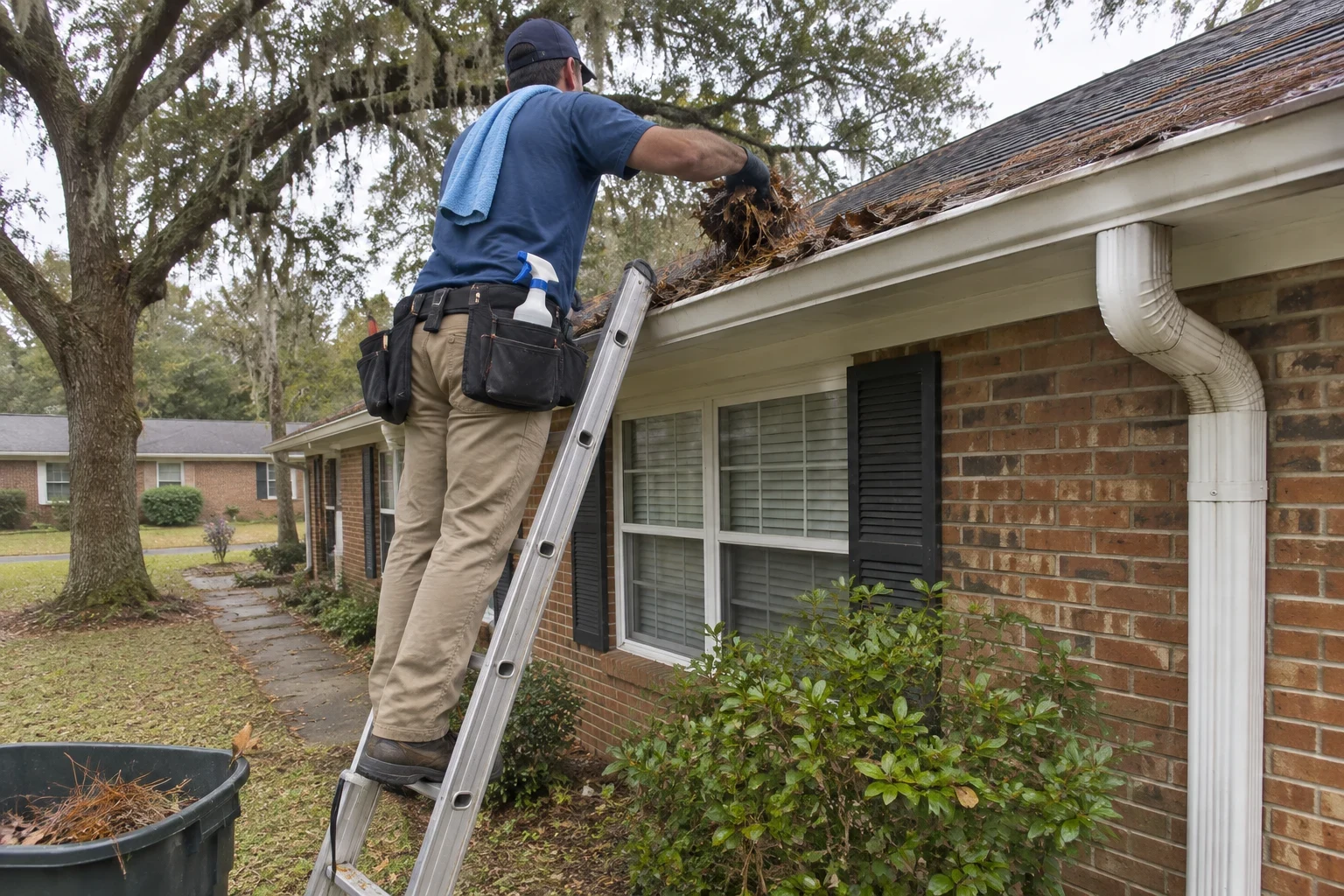
What's the Best Time to Clean Gutters in Walterboro?
Timing a gutter cleaning around what your trees drop, and when the heavy rain comes, keeps water moving off the roof and away from the house.
What's the best time to clean gutters?
For most homes, the best time to clean gutters is twice a year: late spring, once live oaks finish dropping leaves and pine pollen settles, and early winter, after the hardwoods are bare. Homes under heavy pine or oak cover often need a third cleaning before the late summer storms arrive.
Why late spring and early winter make the most sense
A gutter cleaning is most useful right after the trees around your house have finished shedding. Clean too early and the gutters fill again within weeks. Wait too long and wet debris packs down, starts to rot and holds water against the fascia board.
Around Walterboro, live oaks do something many people don't expect: they drop most of their old leaves in early spring, not fall, just as new growth pushes out. Add the yellow pine pollen that coats everything in March and April, and the gutters take a real load before summer. A cleaning in May or early June clears that out before the afternoon thunderstorms begin.
The second visit belongs in late November or December. By then sweetgums, maples and water oaks are mostly bare, and the gutters are ready for winter rain with nothing blocking the downspouts.
What lands in your gutters through the year
Each season sends something different onto the roof. Knowing the pattern helps you see why one cleaning a year usually falls short here.
- Early spring: live oak leaves, oak catkins and the first wave of pine pollen, which mixes with rain into a fine sludge.
- Late spring: more pollen, maple seeds and small twigs from spring winds.
- Summer and early fall: pine needles that drop steadily, plus whatever storms knock loose from the canopy.
- Late fall and early winter: the main hardwood leaf drop, along with sweetgum balls that roll straight into downspout openings.
Signs you shouldn't wait for the next scheduled cleaning
A calendar is a good starting point, but the gutters will tell you when they need attention sooner. Walk around the house during or just after a steady rain. That is when problems show plainly.
If you see any of the following, it is worth having the gutters cleaned now rather than at the next season change.
- Water spilling over the front edge of a gutter instead of running to the downspout.
- A downspout that drips or runs weakly while the gutter above it is full.
- Seedlings or grass growing along the gutter line.
- Streaks or dirty water marks on siding or window glass below a gutter run.
- A gutter section that sags or has pulled away from the fascia.
- Standing water or soil washout at the foundation after a storm.
How your trees and roof change the schedule
A house in open sun with a few young trees may do fine with one careful cleaning each winter. A house tucked under mature pines and live oaks, which describes a lot of lots in the Lowcountry, often needs three visits: late spring, late summer and early winter.
Roof pitch matters too. Steep roofs shed needles and leaves into the gutters quickly, while lower-slope roofs let debris sit and settle before it washes down in a hard rain. Long gutter runs with only one downspout clog faster than short runs with a downspout at each end.
Hurricane season runs from June through November, and the worst rain tends to come in late summer and early fall. If your gutters filled up over the summer, a cleaning in August gives the system its full capacity before the heaviest storms.
What happens after the cleaning
Clearing the gutter troughs is only half the job. We flush each downspout to make sure water runs freely at ground level, then check that splash blocks or extensions are carrying water away from the foundation. Debris is bagged and hauled off, and we rinse anything that dripped onto walkways or siding.
A little after the visit, we check back to see how the gutters handled the next good rain. We will also walk you through what to watch for between cleanings, such as which downspouts tend to clog first on your house and which trees are the main source. That way the next visit can be timed to your property rather than a guess.
More questions about gutter timing
Something not covered here? (843) 938-3795
Is it a bad idea to clean gutters in the middle of summer?
Not at all. If needles or storm debris have filled the gutters, a summer cleaning is better than waiting. It simply works best as an extra visit added to the spring and winter cleanings.
Should I clean my gutters before or after my windows?
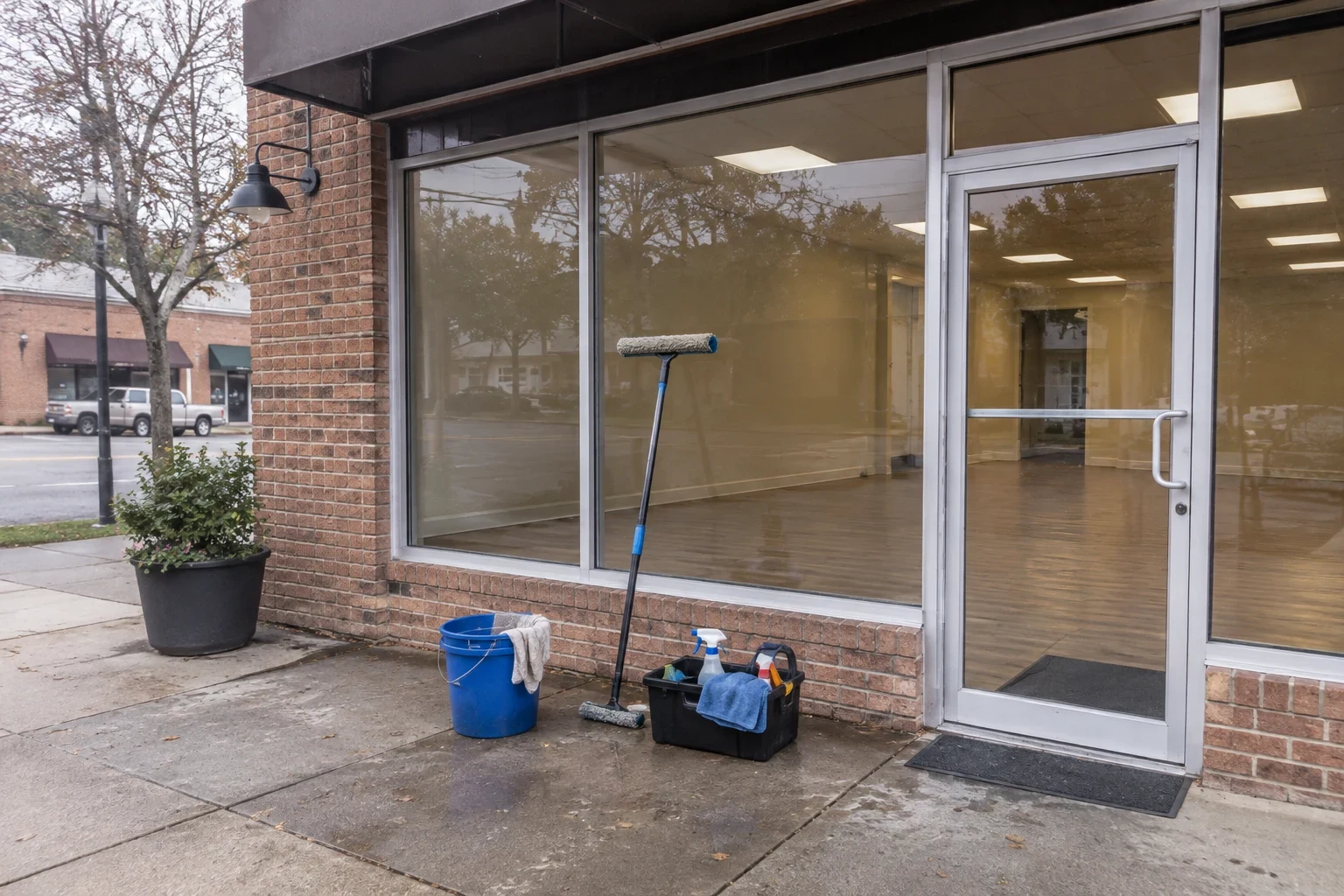
Gutters first. Cleaning them can loosen dirt and water that runs down the siding and glass, so scheduling residential window cleaning afterward keeps the glass streak-free.
Do gutter guards mean I never need a cleaning?
Guards cut down on leaves, but pine needles and pollen still collect on top of and inside many styles. Guarded gutters usually need less frequent attention, not none.
How long does a typical gutter cleaning take?
It depends on the length of the gutter runs, the roof height and how packed the debris is. Most single-family homes are done within part of a day, cleanup included.
Plan your next gutter cleaning around your trees
Tell us about your roof, your trees and when the gutters last overflowed. We will suggest a schedule that fits your property and set a time to come out and get the water flowing again.